Port Operations Jobs: Roles, Skills, and Routes
Port operations jobs span terminals, agencies, and vessel support. Learn the skills, credentials, and experience needed to build a strong shore-side career.
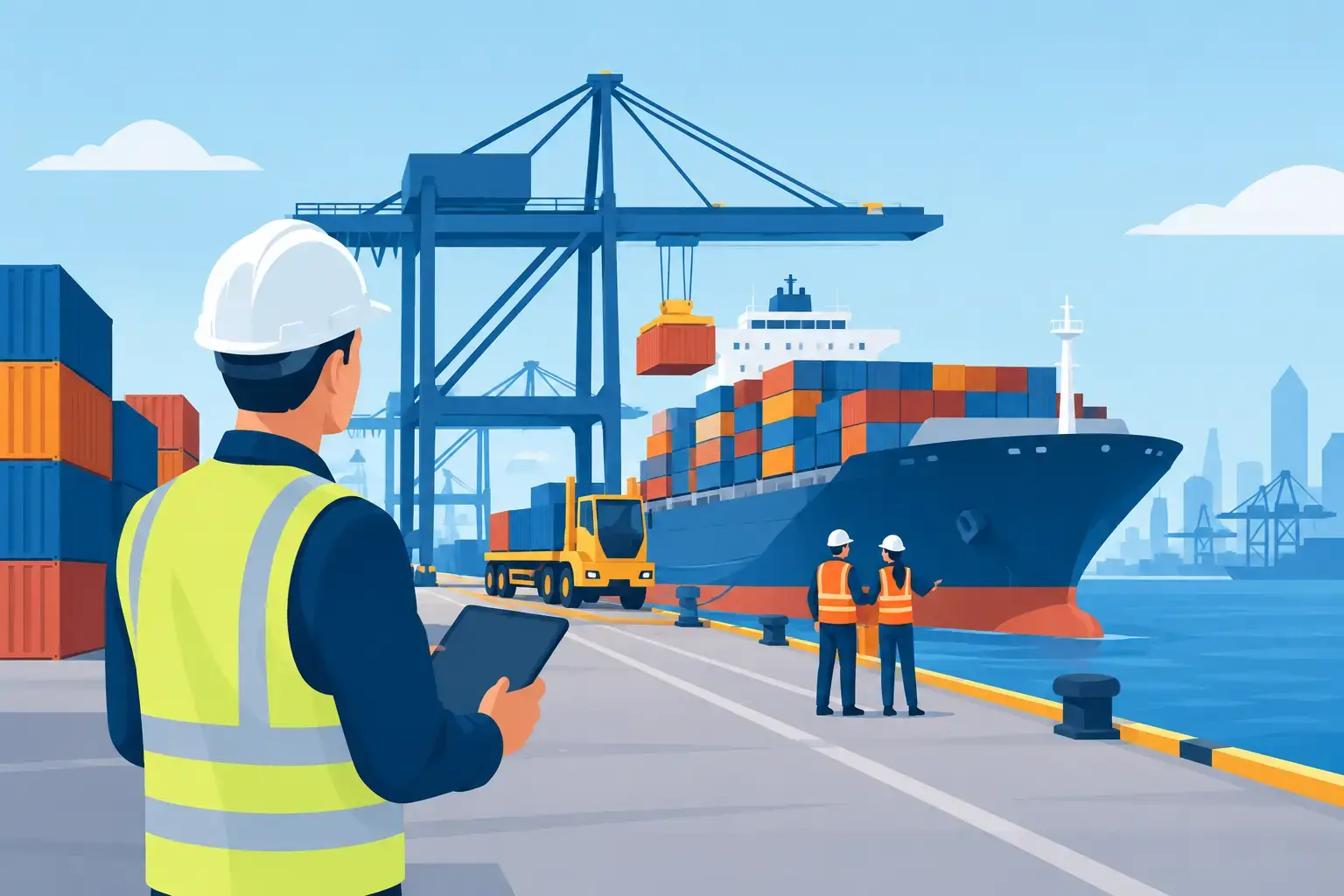
A vessel can be alongside for 12 hours and still generate a week of work before it sails: berth planning, cargo documentation, launch arrangements, crew changes, pilotage, stores, and post-call reporting. Port operations jobs sit in the middle of that activity. They are shore-side roles for people who can turn changing vessel schedules, cargo requirements, and local restrictions into a port call that runs safely and on time.
For seafarers looking ashore, port work can be a logical next move. For students and early-career professionals, it offers a direct view of how shipping decisions become physical operations. The route is not one-size-fits-all, though. A container terminal, ship agency, bulk port, offshore supply base, and cruise terminal all hire operational people, but the work, hours, and qualifications differ.
What port operations work actually involves
Port operations is often described as coordination. That is true, but it can make the role sound more administrative than it is. Good operators make decisions under time pressure, with safety, cost, vessel turnaround, and commercial commitments all competing for attention.
A typical day may start with an updated ETA that puts a vessel outside its berth window. The operator then needs to understand whether the delay affects pilots, tugs, line handlers, stevedores, bunker delivery, customs clearance, a charterer’s cargo plan, or the next vessel waiting offshore. The right response depends on the port, the cargo, and who holds each contractual responsibility.
The work is usually office-based with regular time on the quay, terminal, or vessel. It is also schedule-led. Ports do not stop because it is Friday evening, and many roles include shift coverage, on-call duty, or communication with vessels and principals in other time zones.
Common port operations jobs
Terminal operations coordinator or supervisor
Terminal operations roles focus on moving cargo through a facility safely and efficiently. In container terminals, that may mean yard planning, gate flow, crane productivity, vessel stowage coordination, and reefer monitoring. In dry bulk, liquid bulk, or breakbulk facilities, the priorities may be loading sequences, stockpile management, draft restrictions, cargo sampling, and equipment availability.
Entry-level coordinators often monitor plans and communicate exceptions. Supervisors take greater responsibility for labor allocation, shift performance, incident response, and meeting a vessel’s agreed turnaround time. Experience with terminal operating systems can be valuable, but the ability to read an operation on the ground matters just as much.
Ship agent or port agency operator
A ship agent represents the vessel and its principal during the port call. That can include arranging pilots and tugs, submitting arrival documentation, coordinating immigration and crew changes, booking launches, organizing cash-to-master deliveries, ordering stores, and producing a final disbursement account.
Agency work suits professionals who are organized, calm with clients, and comfortable owning a large number of moving parts. It is fast-paced, especially in ports with frequent calls or short port stays. A late flight for a relieving officer or a missing customs document can quickly become an operational issue that needs a practical solution, not a lengthy email chain.
Port captain, marine operations, and vessel support roles
Marine operations teams work close to the vessel side of the call. Depending on the company, responsibilities can include berth suitability, cargo readiness, navigation restrictions, weather monitoring, vessel inspections, operational reporting, and liaison with Masters, terminals, and port authorities.
Former deck officers often move into these positions because they understand passage plans, mooring operations, cargo constraints, and the reality of working with a short-handed crew. That background is useful, but shore-side employers will also look for commercial judgment and clear documentation. Knowing how an operation should work is different from managing the cost, stakeholders, and contractual exposure around it.
Cargo, logistics, and documentation roles
Cargo operations professionals track what is moving, when it can move, and whether the paperwork matches the physical cargo. Bills of lading, manifests, dangerous goods declarations, delivery orders, survey reports, and customs filings can all sit within the wider workflow.
These roles are a strong entry route for candidates with logistics, trade, or supply chain experience. Accuracy is essential, but speed also matters. A document held up at the wrong point can delay clearance, gate release, loading, or sailing.
Skills that make candidates useful from day one
The strongest candidates are not simply familiar with shipping terms. They can identify what needs attention, communicate it to the right party, and keep a clear record of decisions.
Operational communication is central. A concise update to a Master, terminal planner, charterer, or superintendent should state the current position, the impact, the action underway, and the next expected update. It should not force the reader to search through a long message for the actual issue.
Situational awareness also separates capable operators from people who only follow a checklist. A berth change may affect line-handling arrangements. A weather delay may push a cargo survey outside working hours. A crew change may need to be moved when gangway access is restricted. Each individual issue can seem minor until it affects the vessel’s sailing time.
Technical knowledge should be relevant to the work you want. Familiarity with ISPS procedures, port safety rules, cargo segregation, mooring risks, and dangerous goods requirements is useful across many roles. For cargo-facing work, IMDG awareness may be expected. For US secure-port access, a Transportation Worker Identification Credential may be required by the employer and location. Requirements vary, so candidates should read each vacancy carefully rather than collecting certificates without a clear role in mind.
Digital skills matter too. Port teams use voyage reporting tools, terminal systems, cargo platforms, spreadsheets, document portals, and messaging channels every day. You do not need to be a software specialist, but you do need to keep data accurate when the ETA changes three times before lunch.
Turning sea time or adjacent experience into a port career
Seagoing experience gives candidates a real advantage when they explain it in operational terms. Listing vessel types and ranks is not enough. Show the work behind them: cargo watches, port entry preparation, pilot boarding, mooring stations, bunker coordination, port-state control readiness, or communication with agents and terminals.
A Chief Officer moving into terminal or marine operations can emphasize cargo planning, stability, bulk or container familiarity, and ship-shore coordination. An Engineer may be well suited to port equipment, technical services, bunker operations, or vessel support roles if they can connect maintenance discipline with operational continuity. A cadet or junior officer can demonstrate reliability, safety awareness, and a willingness to learn local port procedures.
Candidates coming from logistics, freight forwarding, or customs work should do the reverse. Make the maritime connection explicit. Highlight vessel cutoffs, cargo documentation, port call exposure, dangerous goods handling, or direct communication with shipping lines and terminal teams. Employers want to see that you understand a vessel call has deadlines that cannot be moved casually.
How to search for port operations jobs with intent
Broad searches can produce hundreds of vacancies that share the word “operations” but have little in common. Start by choosing the operating environment you want: terminal, agency, port authority, marine services, offshore base, liner operations, or cargo logistics. Then search role titles used in that part of the sector.
Your profile should make availability and location preferences clear without exposing more than you want to share. On HARBR, maritime professionals can present vessel history, role-specific experience, and relevant certificates while keeping CV access under their control. That is useful when you are quietly assessing a shore-side move while still signed on or committed to your current employer.
Before accepting an offer, ask practical questions. Is the role shift-based? Who owns out-of-hours escalation? How much time is spent at the terminal or onboard vessels? What systems does the team use? Is success measured by berth productivity, turnaround time, documentation accuracy, cost control, or client retention? The answers reveal whether the job is genuinely operational or primarily administrative.
The trade-off behind a port-side career
Port work can offer more predictable time ashore than a rotation at sea, but it does not always mean predictable hours. A vessel delay, storm warning, cargo stoppage, or medical evacuation can override the day’s plan. Some people enjoy that immediacy. Others miss the defined boundaries of a vessel contract.
The best move is usually not to chase the broadest title. Choose the part of the port call where your experience gives you judgment: cargo, vessel support, terminal flow, documentation, or marine coordination. Build credibility there, keep your credentials current, and let each successful call become evidence that you can be trusted with the next one.