Private CV Sharing for Seafarers, Done Right
Private CV sharing seafarers can control who sees their experience, certificates, and availability while pursuing the right maritime contracts privately.
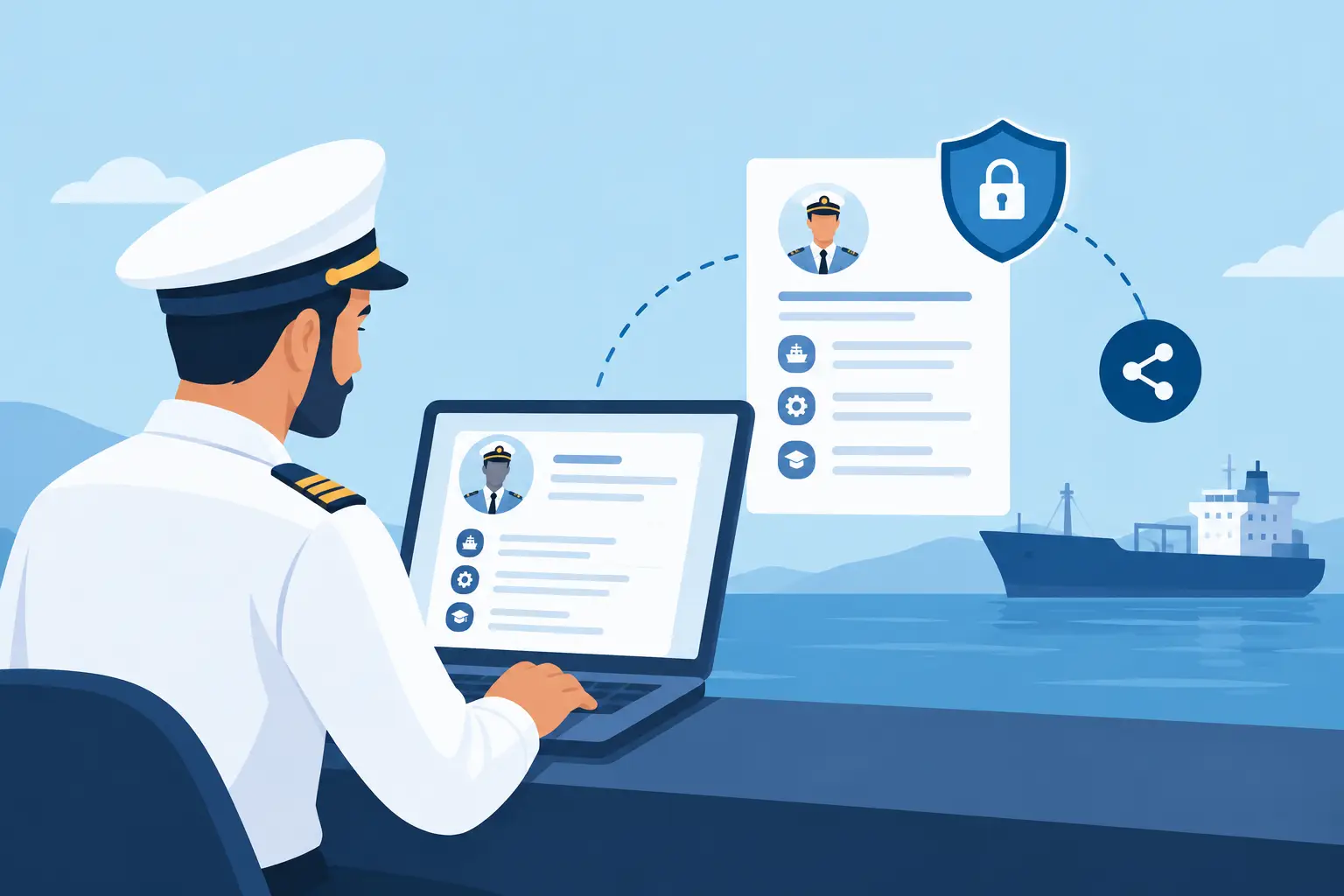
A CV is not just a career document when you work at sea. It can show your current employer, the vessels you have served on, your rotation pattern, certificate details, and whether you may be ready to move. Private CV sharing for seafarers exists for a simple reason: a good opportunity should not require putting that information in front of the entire industry.
For a Second Engineer nearing the end of a contract, discretion may protect an existing relationship with the ship manager. For a Master considering a move into marine operations ashore, it creates room to assess options before making a public signal. For a cadet seeking a first berth, it makes it possible to present the right documents to the right recruiter without losing control of where they travel.
The useful question is not whether your CV should be visible. It is who needs to see it, when, and what they need to see to make a hiring decision.
Why maritime CVs need tighter control
Shipping recruitment works across vessels, offices, agencies, flag requirements, and time zones. A CV often changes hands quickly after it is sent. That can be useful when a crewing team needs to fill a relief role before a vessel reaches its next port. It can also create problems when an outdated file is forwarded, certificates are no longer current, or a professional's job search becomes known before they are ready.
Generic job platforms rarely reflect this reality. They treat a CV as one static attachment and visibility as a broad on-or-off choice. Maritime professionals need more precision. A Chief Officer may want to share sea time, tanker experience, and current endorsements with one employer, while keeping contact details and a full employment history private until a conversation is established.
That is especially relevant for personnel still signed on. Looking at a new rotation does not mean you intend to walk away from a vessel mid-contract. It may mean you are planning six months ahead, assessing a different vessel type, or checking whether your earning potential matches the market. Privacy gives professionals the space to manage their careers responsibly.
Private CV sharing for seafarers is permission-based
The strongest approach is simple: your CV stays private by default, and you choose when to share it. A recruiter or hiring manager can see enough of your professional profile to understand your relevance, but access to the full document happens only with your approval.
This matters because a profile and a CV do different jobs. Your profile can establish credibility through your rank, vessel history, sectors, qualifications, and career direction. It gives an employer a reason to contact you. Your CV provides the deeper record needed for shortlisting and verification.
Separating the two prevents a common problem in maritime recruitment: sending a full CV too early to every vacancy that looks plausible. That approach can expose more personal information than necessary and create confusion when several versions of the same document circulate. It also makes it harder to know which company has your latest certificate status or availability.
On HARBR, private sharing is built around that member decision. You can maintain a professional maritime profile, communicate with relevant employers or recruiters, and decide when a CV or supporting documents should be released. The platform is designed around how hiring actually happens in shipping, not around a public feed.
Share the current version, not an old attachment
A CV is only as useful as its accuracy. In shipping, small changes matter. A new vessel assignment, an upgraded CoC, a completed DP course, a medical renewal, or a revised availability date can change whether you fit a role.
Before sharing, check that your rank, vessel types, trade areas, and dates are consistent. Keep certificate expiry dates current, particularly where a role has mandatory requirements. If you are available after sign-off rather than immediately, state that clearly. A crewing manager filling a fast turnaround relief position needs a different answer from a company building a candidate pipeline for the next quarter.
The goal is not to pack every detail into the first exchange. It is to make the information reliable enough that both sides can decide whether a serious conversation is worthwhile.
Give access for a defined hiring purpose
A private CV should be shared because there is a specific opportunity, discussion, or verification need. That could be a Chief Engineer vacancy on a product tanker, a port captain role on the Gulf Coast, or a commercial position supporting dry bulk chartering. Context protects both sides from wasted time.
When you receive a request, look at the role, company, vessel segment, location, contract terms, and expected joining window. Ask practical questions if those basics are not clear. Is the employer direct, a ship manager, or an agency? Is the opening confirmed? Which certificates are essential? What is the rotation? A legitimate hiring conversation should withstand those questions.
There are cases where speed matters. A vessel delayed by a last-minute medical issue may require a qualified relief officer quickly. Even then, private sharing does not need to become careless sharing. You can provide the relevant CV and credentials to the verified party while keeping the process documented and controlled.
What to keep private until it is needed
Professional discretion is not about withholding material information from a serious employer. It is about matching the information shared to the stage of the conversation.
Your profile can normally cover the facts that establish fit: role, experience, vessel class, geographic preference, work authorization where relevant, and broad availability. A CV shared privately can provide the complete employment sequence and training record. More sensitive details, such as personal contact information, identity documents, medical information, bank details, and full certificate copies, should only be provided through an appropriate, verified hiring process.
This distinction is worth protecting. No genuine recruiter needs your passport scan or seaman's book simply to decide whether to schedule an initial call. A company may need those documents later for compliance, travel, flag administration, payroll, or joining instructions. Timing is the difference between sensible due diligence and unnecessary exposure.
For shore-side maritime professionals, the same principle applies. A broker, superintendent, or analyst may not have regulated certificates to manage, but their CV can still reveal clients, deal exposure, compensation history, or confidential commercial work. Private sharing lets them explore a move without placing that history in an open database.
Build a CV that earns the right response
Privacy works best when the document is easy to assess. Recruiters and hiring managers are often reviewing candidates between port calls, meetings, and operational issues. Make the first page do its job.
Lead with your current or most recent position, the vessel types or sector you know, key qualifications, and availability. Then show a clean vessel and employer history with accurate dates. A deck officer should not bury tanker or offshore experience halfway through a long document. An ETO should make the relevant electrical systems, automation exposure, and endorsements clear. A shore-side candidate should show operational scope, market coverage, and measurable responsibilities without disclosing commercial confidences.
Avoid a single generic CV if your career crosses sectors. A professional moving from container vessels to port operations may need one version that emphasizes navigation and safety management, and another that gives greater weight to terminal coordination, cargo planning, and stakeholder communication. The facts remain truthful, but relevance changes.
Keep the document readable. Dense pages of copied certificate numbers and every port call from a long career can slow down a review. Include what supports the role, then be ready to provide further documentation when requested.
Protect your reputation while staying available
Private sharing should not make you invisible. The balance is to be discoverable for the work you want while remaining in control of your documents. A complete professional profile, accurate availability, and clear preferences give employers enough information to approach you with relevant opportunities.
Be equally deliberate in your responses. If a role is not right, decline professionally rather than leaving a recruiter guessing. If you are interested but tied to a current rotation, say when you can speak and when you could realistically join. Maritime hiring depends on timing, and clear communication is often remembered as much as a strong CV.
There is no single visibility setting that suits every seafarer. A cadet may benefit from wider exposure while building first connections. A senior officer under contract may choose a narrower approach. A professional changing from sea to shore may want conversations with only a few employers at first. Your career stage, current contract, and personal circumstances should set the level of access.
Treat your CV like any other critical document onboard: keep it current, share it with a clear purpose, and know exactly who has it. That leaves you free to consider the next contract or shore-side move on your own terms.